-p-500.png)


An effective Airbnb maintenance checklist protects revenue by finding small problems before they become guest emergencies. For Southern California owners, the plan should combine turnover inspections, monthly preventive visits, seasonal system service, and an annual property review, with extra attention to heat, pools, coastal corrosion, drainage, and wildfire smoke.
Ask Affluent Vacays about full-service vacation rental management across Southern California.
An Airbnb maintenance checklist is a documented schedule for inspecting, servicing, and repairing a short-term rental. The most reliable plans assign each task to a responsible person, set a deadline, require photo evidence, and establish an escalation path before the next guest arrives.
A clean turnover can hide developing problems. A slow drain may still look acceptable. An air conditioner may cool during a morning inspection but fail during a Palm Springs afternoon. Salt residue near Venice or Santa Monica may not seem urgent until hardware begins to corrode. Professional maintenance therefore focuses on risk, not only appearance.
Airbnb maintenance checklist at a glance
Use the schedule below as an operating baseline, then adjust it for the property's equipment, age, location, and booking volume. Every task should have an owner, evidence, and a clear rule for when to call a licensed specialist.
| Frequency | Primary focus | Typical owner | Required record |
|---|---|---|---|
| Every turnover | Guest safety, function, and visible damage | Turnover or inspection team | Completed checklist and photos |
| Monthly | Leaks, HVAC, appliances, exterior, and inventory | Property manager or maintenance technician | Work orders and completion evidence |
| Seasonal | Climate-specific preparation and major systems | Specialized vendors | Service reports and invoices |
| Annual | Asset condition and capital planning | Manager, owner, and qualified contractors | Condition report and prioritized budget |
Downloadable-style master checklist
- Confirm smoke alarms, carbon monoxide alarms, locks, exterior lighting, and emergency information.
- Run faucets, showers, toilets, drains, garbage disposal, and water-using appliances while checking for leaks.
- Test HVAC performance, thermostat operation, filters, ceiling fans, and visible vents.
- Inspect furniture, railings, windows, flooring, pool areas, and walking surfaces for hazards or damage.
- Verify internet, televisions, remotes, kitchen appliances, and guest-facing controls.
- Document the result with photos, open work orders, assign vendors, and confirm completion before arrival.
What should you inspect at every turnover?
Turnover inspection is the property's most frequent preventive-maintenance opportunity. The goal is not to ask a cleaner to diagnose complex equipment. It is to catch visible or functional changes early and route them to the right person.
Start with life safety and access
- Test smoke and carbon monoxide alarms according to manufacturer instructions.
- Confirm entry codes, door alignment, deadbolts, gates, and exterior lighting.
- Check stairs, railings, rugs, cords, pool gates, and walkways for hazards.
- Confirm fire extinguishers and emergency information are present and accessible.
A failed access code late at night can quickly become a poor review. Access checks should happen early enough in the turnover window to allow correction without delaying check-in.
Run the property, do not just view it
Turn on taps, flush toilets, run the disposal, start appliances, operate blinds, and test the thermostat. Look beneath sinks and around water heaters for moisture. A functional test is more valuable than a visual glance because many costly failures are invisible until equipment is used.
Record abnormal sounds, odors, error messages, weak water pressure, and slow drainage. Include a close photo and a wider context photo in the work order. Better evidence helps a vendor arrive with the right tools and reduces repeat visits.
Monthly preventive maintenance tasks
A monthly inspection should go deeper than a turnover without becoming a full property audit. Schedule it during a gap when possible, use the same checklist each month, and compare new findings with prior photos.
Review water, HVAC, and appliances
- Inspect supply lines, shutoff valves, drains, cabinets, and ceilings for moisture or staining.
- Review HVAC filters and system performance, then service them on the equipment's required schedule.
- Clean accessible appliance filters and inspect seals, hinges, cords, and connections.
- Check the water heater area and document any corrosion, moisture, or unusual operation.
- Look for pest activity and address contributing conditions promptly.
Water and cooling issues deserve priority because they can disrupt a stay and damage the property. The inspection record should distinguish between an observation, a repair request, and an urgent escalation.
Protect the guest experience
Maintenance is also operational quality control. Confirm that lighting is consistent, furniture is stable, remotes work, internet equipment is online, and frequently used fixtures operate smoothly. Review repeated guest questions and maintenance messages. Repetition often identifies a confusing control, unreliable device, or repair that was treated as a one-time incident.
Learn how turnkey short-term rental operations can reduce day-to-day owner workload.
How does Southern California change the schedule?
Southern California is not one maintenance environment. A Palm Springs home, a coastal rental, and a property in greater Los Angeles face different exposure. The core checklist can remain consistent, but seasonal priorities should follow local conditions.
Plan for desert heat and heavy HVAC demand
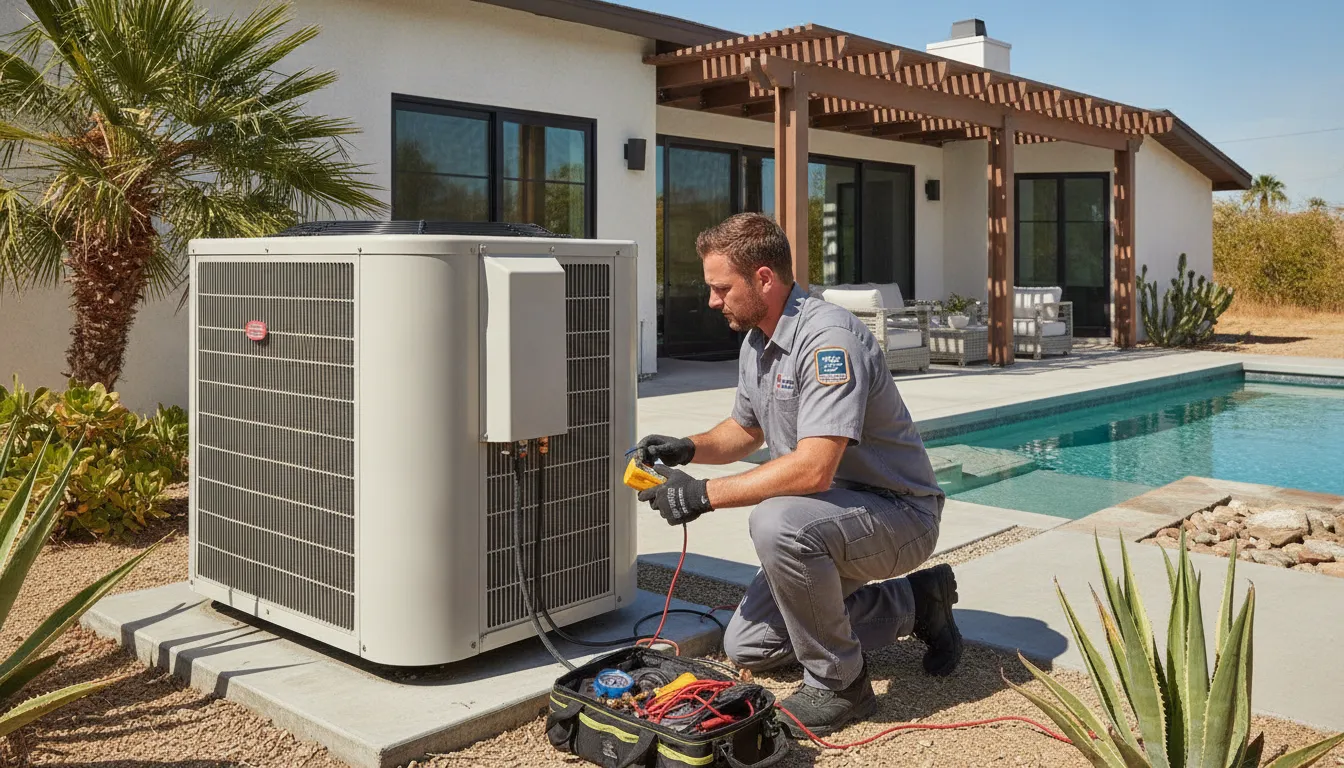
In Palm Springs and Desert Hot Springs, cooling is a guest-critical system. Schedule qualified HVAC service before peak heat, confirm thermostat settings and communication procedures, and maintain an escalation plan for loss of cooling. Inspect outdoor equipment for blocked airflow and keep vendor contact details current.
Pool systems also work hard in hot weather. Coordinate water-quality checks, circulation equipment review, and deck inspection with qualified pool vendors. Record findings rather than relying on informal text messages, especially when multiple vendors share responsibility.

Watch coastal corrosion and moisture
Near Venice, Santa Monica, and Oxnard, salt air can accelerate wear on exterior hardware, gates, railings, outdoor furniture, and HVAC components. Add documented corrosion checks to monthly or seasonal visits. Clean and service equipment according to manufacturer guidance, and replace compromised safety hardware promptly.
Prepare for smoke, wind, and seasonal rain
Dry conditions and wildfire smoke can affect outdoor areas and indoor air quality. Review filters and outdoor debris after significant events, then use qualified professionals when systems require service. Before seasonal rain, inspect visible drainage paths, gutters, roof areas from safe access points, exterior seals, and low spots where water may collect.
Build a reliable vendor-coordination system
A checklist only works when findings become completed work. Vendor coordination should create accountability without disrupting guests or exposing access information unnecessarily. Affluent Vacays coordinates vetted cleaning teams and specialized maintenance professionals across its Southern California operations.
Give every work order enough context
- Property address and precise location of the issue
- Clear description, photos, and relevant equipment details
- Priority level and guest impact
- Approved access window and access method
- Required completion evidence
- Escalation contact if scope changes
Use unique, time-limited access whenever the property's system supports it. Avoid leaving permanent access details in broad group messages. If work occurs during an occupied stay, coordinate with the guest and minimize disruption.
Separate urgent, preventive, and capital work
Urgent work affects safety, habitability, or an active guest stay. Preventive work reduces the chance of failure. Capital work protects long-term value but may require budgeting and a future vacancy window. Labeling these categories helps owners approve the right response and stops routine items from competing with emergencies.
A scalable property management system should also track recurring failures. Repeated repairs to the same item may justify replacement, while repeated vendor callbacks may signal that the scope or evidence is incomplete.
Annual deep-maintenance and capital plan
Once a year, step back from turnover-level details and assess the property as an asset. Review service history, recurring guest complaints, invoices, warranties, and the prior year's inspection photos. The output should be a prioritized plan, not an unstructured list.
Inspect by system and risk
- Arrange appropriate professional review of HVAC, plumbing, electrical, roofing, pool, and other major systems.
- Assess exterior finishes, drainage, windows, doors, decks, railings, and walking surfaces.
- Review furniture, mattresses, linens, cookware, and high-use guest amenities for condition.
- Confirm that operating procedures, vendor contacts, access controls, and emergency information remain current.
Keep repairs and upgrades distinct. A repair restores expected function. An upgrade may improve positioning or guest experience, but it should be evaluated against property goals and budget. This distinction makes owner decisions clearer.
Turn the checklist into an operating system
The most useful maintenance program connects inspection, evidence, action, and verification. A task is not complete when a vendor says it is done. It is complete when the result is documented, reviewed, and reflected in the property record.
Keep one record for each property so an owner or manager can see what changed over time. The record should show the original observation, approval, vendor response, completion evidence, and any follow-up test. This history is especially useful when a problem returns after several weeks or appears only under heavy guest use. It also supports better capital planning because decisions can be based on recurring repair patterns rather than memory.
Review the checklist quarterly with the people who use it. Turnover teams may notice that a field is unclear, while vendors may identify a missing equipment detail that slows service. A short review can remove low-value steps, clarify escalation rules, and add tasks prompted by recent incidents. The checklist should remain consistent enough to compare results but flexible enough to improve as the property changes.
- Inspect: Use the correct checklist for the visit frequency and market.
- Document: Capture findings with clear notes and useful photos.
- Triage: Assign urgency, guest impact, responsibility, and deadline.
- Execute: Send a complete scope to the appropriate vendor.
- Verify: Review completion evidence and test function when appropriate.
- Learn: Track repeat problems and update the checklist or capital plan.
Owners who prefer a hands-off model can use full-service management to coordinate inspections, vendors, guest communication, and completion records. This is especially valuable for owners who live outside the market or manage properties across multiple Southern California climates.
Frequently asked questions
How often should I perform Airbnb property maintenance?
Inspect the property at every turnover, complete a documented preventive visit monthly, service major systems seasonally, and schedule a deeper annual review. Increase frequency for high-use amenities or when a property faces unusual weather, recurring failures, or heavy booking volume.
What belongs on an Airbnb turnover maintenance checklist?
A turnover checklist should cover life-safety devices, locks, lighting, plumbing, appliances, HVAC performance, visible damage, exterior hazards, and guest supplies. It should also require photos, identify who owns each finding, and define when an issue must be escalated.
Why does Southern California require a specialized maintenance plan?
Heat, coastal salt, pools, dry conditions, wildfire smoke, and seasonal rain create different priorities across Southern California markets. The same base checklist can be used across properties, but the service calendar should reflect local exposure and equipment.
Should Airbnb hosts manage maintenance themselves?
Owners can manage maintenance when they have reliable local vendors, documented standards, and emergency coverage. Full-service property management can coordinate these responsibilities for owners who prefer a hands-off approach or need consistent execution across multiple properties.
Protect the property and the guest experience
A disciplined Airbnb maintenance checklist does more than reduce emergencies. It gives owners clearer records, supports faster vendor decisions, and protects the consistency guests expect. Start with the schedule above, tailor it to the property's systems and location, and review it whenever repeat issues reveal a gap.